The Birth of ATLS: How a Surgeon’s Personal Tragedy Revolutionized Global Trauma Care
For decades, the Advanced Trauma Life Support (ATLS) program has served as the universal standard for initial trauma management. Used by millions of practitioners worldwide, ATLS provides a concise and systematic approach to managing emergent trauma cases. What few realize is that this globally recognized educational system, which saves countless lives daily, was born not in a university lab, but out of the horrific personal tragedy experienced by one man and his family in a rural Nebraska field.
This article explores the origins of ATLS, examining how the shortcomings in care received by an injured family spurred the creation of a standardized, systematic approach that fundamentally changed the world of trauma care.
The Night that changed Trauma Care …
The protagonist of this pivotal medical history is Dr. James Styner, an orthopaedic surgeon practicing in Lincoln, Nebraska, in the 1970s. Dr. Styner was also a pilot.
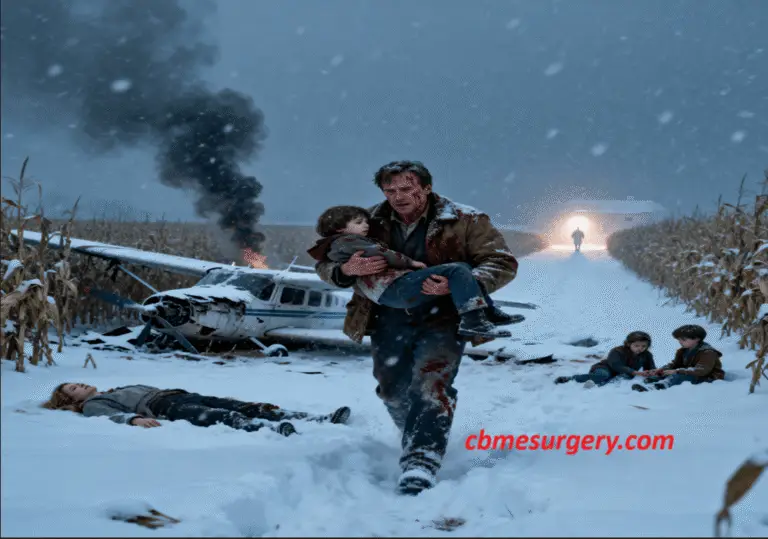
In February 1976, Styner was piloting his 6-seater plane home with his wife, Charlene, and their four children following a wedding in Los Angeles. On the evening of February 17th, around 6:00 PM, due to poor visibility and deteriorating weather, the plane crashed into the forests and fields of rural Nebraska.
The impact was devastating. Styner’s wife, Charlene, was killed instantly. Styner suffered rib and facial fractures and impaired vision. Three of his four children sustained serious injuries, including severe head trauma, leaving them unconscious for days (Randy was in a coma for three days; Rick and Kim for seven days and five days, respectively). Styner, with the help of his eldest conscious son, Chris, spent approximately eight hours providing care and protection in the freezing darkness until he could find help.
From Wreckage to Wrong Turn
After hours, Styner located a road and found help, finally reaching a small, nearby community hospital. This moment, which should have marked the end of the nightmare, became the catalyst for global change, as the trauma care they received was shockingly inadequate.
The issues were immediately apparent:
- Delayed Access: The hospital doors were locked upon arrival, as it was only staffed by nurses at night, requiring Styner to demand entry.
- Disorganized Staff: When physicians arrived, they were described as disoriented and acting in a confused manner.
- Lack of Systematic Assessment: Styner observed several critical oversights in management:
- Cervical Spine Protection was neglected when one semiconscious child was carried “by the shoulders and knees” to the x-ray suite.
- Minimal IV access was obtained for the severely injured victims.
- An open, contaminated facial laceration was prematurely sutured closed after nine hours of exposure.
Styner, realizing he lacked confidence in the staff’s ability, took over his family’s care until they could be transported by the Air National Guard to Lincoln General Hospital 14 hours after the crash.
The Defining Insight: Changing the System
Returning to his normal life, Dr. Styner struggled with the profound deficiencies in care his family received. He had the crucial insight not to blame the individual practitioners, but to recognize the lack of quality education and standardized protocols.
This realization culminated in the quote that now defines the philosophy of ATLS:
“When I can provide better care in the field with limited resources than my children and I received at the primary facility, there is something wrong with the system and the system has to be changed”.
Recognizing that he, a trauma surgeon using basic field first aid, provided better initial care than the primary hospital facility, Styner decided to change the system.
The Development of the Advanced Trauma Life Support (ATLS) Program
Dr. Styner collaborated with physicians and nurses in Nebraska, including family physician Dr. Ron Craig, vascular surgeon Paul (Skip) Collicott, and nurse Jodie Bechtel. They sought to bring order to the “chaos of things to be done” in trauma care.
They drew inspiration from the structure of the existing Advanced Cardiac Life Support (ACLS) course, designing a similar schematic, point-based training course for trauma. The initial intent was specifically to create a training course for physicians in rural Nebraska.
The core framework of ATLS reflects a direct response to the critical failures Styner witnessed:
- Systemic Primary Survey (The ABCDE Assessment): The cornerstone of ATLS is the systematic ABCDE assessment (Airway, Breathing, Circulation, Disability, Exposure), designed for the early recognition and treatment of potentially life-threatening conditions. This systematic approach prioritizes treating the greatest threat to life first.
- Cervical Spine Protection: Clear emphasis was placed on objective clinical clearance and protection of the cervical spine.
- Resuscitation Basics: Clear emphasis was placed on ensuring adequate IV access and appropriate antibiotics for open wounds.
The greatness of the ATLS project lies in its simplicity and its ability to standardize the response to trauma, particularly during the critical first hour—the “golden hour”.
The first courses for rural Nebraska doctors were successfully implemented in 1978. By 1979/1980, the project was adopted by the American College of Surgeons Committee on Trauma, which subsequently launched it nationally and recommended the ABCDE assessment approach for all trauma patients.
ATLS Today: A Global Language of Trauma Care
The legacy of Dr. Styner’s tragedy and subsequent efforts is immense. ATLS has revolutionized global trauma management. It has become an essential part of medical training worldwide.
Today, ATLS is taught in over 75 countries and has trained well over one million providers globally. Proper implementation of ATLS can decrease mortality in traumatic patients significantly.
The program’s success stems from its foundational design, which provides a clear, systematic process that can be used across borders and is independent of resource availability. The core concepts—the ABCDE approach and prioritizing life threats—remain the same as they were in the 1970s, making it highly adaptable for diverse settings, from major trauma centers to critical access hospitals in rural areas. This enduring and evolving framework ensures that the initial intent of ATLS—to provide consistent, quality care regardless of location—continues to save millions of lives around the world.